Author: nnikolic86@gmail.com

  • Why the Right KPIs Matter in Digital Marketing

    Why the Right KPIs Matter in Digital Marketing

    Digital marketing gives organizations access to an enormous amount of data. Marketers can measure impressions, clicks, website visits, engagement, conversions, bounce rates, email opens, and dozens of other metrics. However, having access to more data does not necessarily lead to better decisions. The real challenge is determining which measurements actually matter to the organization.

    This is where key performance indicators (KPIs) become important. KPIs allow marketers to focus on measurements that demonstrate progress toward specific business and marketing goals. Rather than reporting every available metric, organizations should identify the indicators that provide meaningful information about performance and can help guide future decisions.

    Connecting KPIs to Business Goals

    One of the most important principles when selecting KPIs is alignment with organizational goals. According to Jackson (2016), KPIs should connect measurement with the objectives an organization is trying to accomplish. Without this connection, marketers may spend too much time analyzing numbers that look impressive but provide little information about actual business performance.

    For example, imagine a company launches a social media campaign with the primary goal of increasing brand awareness. In this situation, reach, impressions, and brand mentions could be appropriate KPIs because they indicate how many people are being exposed to the brand. If the company’s goal is instead to generate qualified leads, impressions alone would not provide enough information. Metrics such as click-through rate (CTR), landing-page conversion rate, cost per lead, and qualified leads would provide a much stronger indication of whether the campaign is accomplishing its objective.

    This distinction is especially important because marketers have access to so many possible measurements. Meltwater (2026) notes that organizations should select social media KPIs based on the business outcome they are trying to achieve rather than using the same measurements for every campaign. For example, awareness campaigns can emphasize reach and impressions, while lead-generation campaigns should focus more heavily on conversion-related metrics.

    Using the REAN Model

    One useful approach for organizing KPIs is the REAN model, which divides the customer journey into four areas: reach, engage, activate, and nurture (Jackson, 2016). Each stage can be associated with different KPIs depending on what the organization wants customers to do.
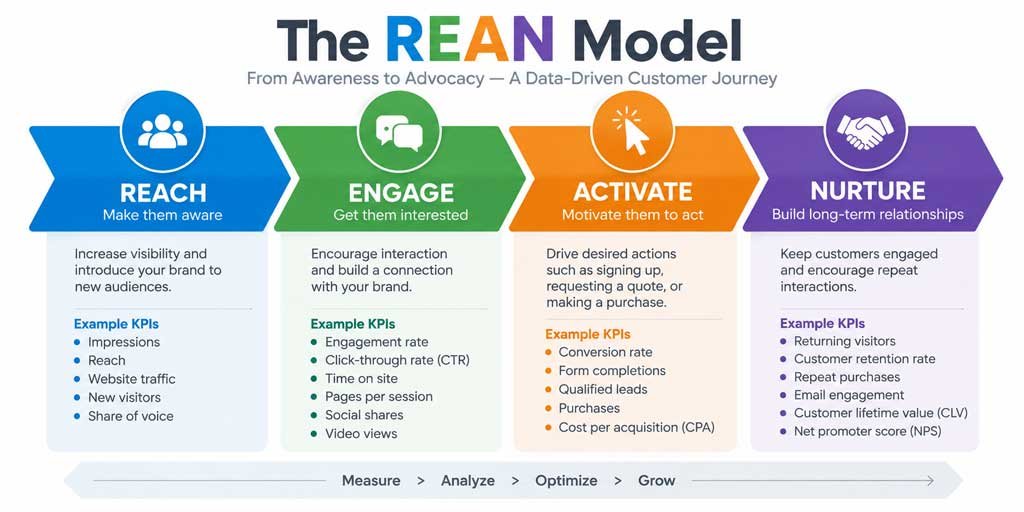
    Figure 1. The REAN model and examples of KPIs across the customer journey.

    In the reach stage, a company is trying to increase visibility among potential customers. Appropriate KPIs might include impressions, reach, website traffic, or new visitors. During the engage stage, marketers want to understand whether people are interacting with the brand. KPIs might include engagement rate, time spent on a page, content shares, or CTR.

    The activate stage focuses more directly on encouraging customers to take a desired action. Depending on the campaign, conversion rate, completed forms, purchases, or qualified leads could serve as KPIs. Finally, the nurture stage focuses on maintaining customer relationships. Returning visitors, repeat purchases, email engagement, retention, and customer lifetime value can help organizations evaluate whether they are successfully developing long-term relationships.

    Turning Data Into Decisions

    KPIs are valuable not only because they measure performance, but also because they help marketers decide what to do next. For example, a paid digital advertising campaign may generate a large number of impressions but have a low CTR. This could indicate that the campaign is reaching people but the creative, message, offer, or audience targeting is not motivating them to take the next step. Marketers could then test different headlines, visuals, calls to action, or audience segments and compare the results.

    Similarly, analyzing referral traffic can reveal which external sources are sending meaningful visitors to a website. Comparing new and returning visitors can also provide insight into whether content is attracting new audiences while continuing to engage existing ones (DeMers, 2025). These measurements become especially useful when marketers compare performance over time or against appropriate benchmarks.

    Ultimately, effective digital analytics is not about measuring everything. It is about measuring the right things. When KPIs are clearly connected to business goals, marketers can move beyond simply reporting numbers and begin using data to explain performance, improve campaigns, allocate resources more effectively, and support better business decisions.

    References

    DeMers, J. (2025). 50 content marketing metrics to measure your campaign. Meltwater.

    Jackson, S. (2016). Cult of analytics: Driving online marketing strategies using web analytics (2nd ed.). Routledge.

    Meltwater. (2026). Social media metrics and KPIs: What to measure in 2026. Meltwater.

  • Why Digital Marketing Works Better Across Departments

    Why Digital Marketing Works Better Across Departments

    Digital marketing campaigns may be managed by a marketing team, but their impact rarely stays within the marketing department. A campaign can affect sales, customer service, operations, IT, finance, and leadership. Each of these departments may also have different expectations for what a successful campaign should accomplish. Because of this, considering the needs of multiple departments can help organizations develop stronger campaigns and make better use of the data those campaigns generate.

    Breaking Down Organizational Silos

    One challenge within larger organizations is that departments can become isolated from one another. Marketing may have its own goals and information, while sales, customer service, IT, and other departments operate with different priorities and data. Jackson (2016) explains that these information silos can create inefficiencies and become a major obstacle for organizations trying to become more data guided.

    The hub-and-spoke method provides an approach for breaking down these silos. At the center is an information hub organized around people, processes, and tools, while the spokes represent the different business units or areas of the organization. The hub is responsible for supplying those areas with useful information derived from data and creating processes that allow the organization to make better use of its existing resources (Jackson, 2016).

    Digital analytics professionals play an important role within this hub. Their responsibility goes beyond simply collecting data and creating reports. They can work with different departments to understand their needs, identify opportunities, answer business questions, and help transform data into actions that improve performance.

    Better Campaigns Start With Shared Goals

    Cross-departmental collaboration is especially valuable before a digital marketing campaign launches because different departments may define success differently. Marketing might focus on engagement, website traffic, or conversions, while sales may be more concerned with qualified leads and revenue. Customer service can provide insight into common customer concerns, while IT can determine whether the technology needed to support and measure the campaign is working correctly.

    For example, imagine a company is developing an email campaign to promote a new service. Marketing may create the message, design, and landing page, but sales could provide information about common questions or objections from prospective customers. Customer service could identify recurring concerns among existing customers, while IT could help ensure that the website, CRM, email platform, and analytics tools work together properly.

    Bringing these perspectives together can also help marketers establish more meaningful key performance indicators (KPIs). Instead of simply asking how many people opened an email or clicked a link, the organization can examine what happened afterward. Did those visitors become qualified leads? Did the leads become customers? Did the campaign ultimately contribute to revenue? These questions connect marketing performance to broader organizational goals.

    Turning Analytics Into Action

    The ACME example presented by Jackson demonstrates how the hub-and-spoke approach can work in practice. Instead of keeping analytics professionals separated from the departments they supported, analysts were placed closer to the marketing team. This allowed them to better understand marketing’s challenges and work directly with marketing, CRM, IT, and leadership to develop solutions (Jackson, 2016).

    The collaboration led ACME to identify opportunities involving email automation, audience segmentation, campaign tagging, and remarketing. Rather than simply reporting what had already happened, the analytics team helped determine what could be improved and how the organization could act on the information. According to Jackson (2016), the resulting efforts generated approximately $17 million in new sales during a six-month period.

    What stands out to me about this example is that analytics alone did not produce the result. The improvement came from people in different areas of the organization sharing information, combining their expertise, and working toward common goals.

    Sharing Results Creates More Value

    Cross-departmental collaboration should continue after a campaign launches. Analytics becomes much more valuable when results are shared with the departments that can use the information to make decisions.

    For example, digital analytics might reveal that one audience segment generates significantly more conversions than another. Marketing could use that information to adjust targeting, sales could prioritize stronger leads, and leadership could consider the results when making future investment decisions. Similarly, if visitors frequently reach a product or service page but rarely convert, the data could start a larger conversation about messaging, pricing, customer concerns, or website usability.

    Sharing results can also provide context that analytics alone may not reveal. A dashboard can show what happened, but employees in sales, customer service, IT, or other departments may help explain why it happened. Combining quantitative data with knowledge from across the organization can create a more complete understanding of campaign performance.

    From Marketing Data to Business Intelligence

    Digital analytics should be more than a reporting function. The hub-and-spoke method demonstrates how organizations can organize people, processes, tools, and information so that data becomes useful and actionable across different areas of the business (Jackson, 2016).

    Ultimately, a digital marketing campaign should not succeed only for the marketing department. Its success should contribute to broader organizational goals. By involving multiple departments during campaign development and sharing results afterward, organizations can break down information silos, establish more meaningful measures of success, and turn marketing analytics into insights that support better business decisions.

    Reference

    Jackson, S. (2016). Cult of analytics: Driving online marketing strategies using web analytics (2nd ed.). Routledge.

  • Why Marketing Objectives Matter: Turning Strategy Into Results

    Why Marketing Objectives Matter: Turning Strategy Into Results

    Every successful marketing campaign begins with a clear destination. Marketing objectives provide that direction by defining what a company wants to accomplish and how success will be measured. Rather than relying on assumptions or isolated marketing activities, organizations use marketing objectives to create focused strategies that support long-term business growth.

    Marketing objectives are broad but measurable goals that may include increasing brand awareness, growing market share, boosting sales, entering new markets, or improving customer engagement (Kotler & Keller, 2022). These objectives help organizations prioritize resources, coordinate marketing efforts across departments, and evaluate whether their strategies are producing meaningful results. Without clearly defined objectives, marketing initiatives can become inconsistent, making it difficult to determine whether investments are generating a positive return.

    One of the most effective approaches to developing marketing objectives is the SMART framework. SMART objectives are Specific, Measurable, Achievable, Relevant, and Time-bound (Kotler & Keller, 2022). This framework transforms broad goals into actionable plans. For example, instead of setting a goal to “increase sales,” a SMART objective would be to “increase online sales by 15% within the next 12 months through personalized digital marketing campaigns.” This type of objective provides a clear benchmark for measuring performance and allows organizations to monitor progress and make adjustments if necessary.

    Equally important is ensuring that marketing objectives align with the organization’s mission, vision, and overall business goals. Marketing should never operate independently from the company’s broader strategy. Instead, every campaign, promotion, and communication should reinforce the organization’s purpose and support its long-term direction (Kotler & Keller, 2022). When marketing objectives align with company goals, resources are used more efficiently, messaging remains consistent, and departments can work together toward shared outcomes.

    For example, US Foods is committed to helping foodservice operators succeed by providing innovative products, technology, and business solutions (US Foods, n.d.). A new offering such as SmartCart AI supports this mission by using artificial intelligence to simplify purchasing decisions, recommend products based on customer needs, reduce food waste, and improve operational efficiency. Marketing objectives for SmartCart AI should therefore focus on increasing customer adoption, improving customer engagement, and demonstrating measurable business value to restaurant operators. By aligning these objectives with the company’s mission, US Foods can strengthen customer relationships while reinforcing its competitive position within the foodservice industry.

    Organizations must also consider legal and ethical responsibilities when developing marketing objectives. Marketing strategies should comply with advertising regulations, consumer protection laws, and data privacy requirements (Kotler & Keller, 2022). Companies that collect customer information through websites, mobile applications, or AI-powered tools have a responsibility to protect that data and communicate transparently about how it is used. Ethical marketing also requires honesty in advertising, accurate product claims, and fairness in promotional practices. Marketing objectives should never encourage misleading messaging or prioritize short-term sales at the expense of customer trust.

    As artificial intelligence continues to play a larger role in marketing, ethical considerations become even more important. Companies should ensure that AI-generated recommendations are transparent, unbiased, and designed to provide genuine value to customers rather than simply promoting higher-margin products. Responsible use of customer data not only supports legal compliance but also builds trust, strengthens customer loyalty, and enhances the organization’s reputation.

    Ultimately, marketing objectives serve as the foundation of every successful marketing plan. They provide direction, establish measurable expectations, and ensure that marketing activities contribute to the organization’s overall mission. When companies develop SMART objectives that align with business goals while maintaining legal compliance and ethical standards, they are better positioned to create meaningful customer experiences, achieve sustainable growth, and build long-term competitive advantages.

    References

    Kotler, P., & Keller, K. L. (2022). Marketing management (16th ed.). Pearson.

    US Foods. (n.d.). About US Foods. https://www.usfoods.com/about-us-foods.html

  • Market Segmentation: Using Research Tools to Reach the Right Customers

    Market Segmentation: Using Research Tools to Reach the Right Customers

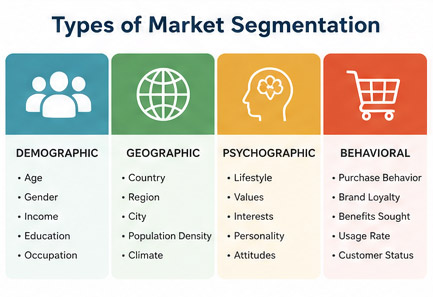
    Launching a successful product requires more than simply having a great idea. Marketers must understand who is most likely to benefit from the product and how to communicate its value effectively. Market segmentation helps businesses divide a broad market into smaller groups of consumers with similar characteristics, allowing organizations to create marketing strategies that better meet customer needs. By using market research tools, marketers can identify these target segments and develop marketing plans that improve customer engagement and increase the likelihood of success.

    One valuable tool for defining a target market is Esri Tapestry Segmentation. This resource combines demographic, geographic, and psychographic data to create detailed consumer profiles. Rather than relying solely on basic demographic information such as age or income, Esri provides insights into consumer lifestyles, purchasing behaviors, interests, and media preferences. These detailed profiles help marketers understand not only who their customers are but also why they make purchasing decisions. For example, a company launching an AI-powered purchasing solution for restaurant operators could use Esri data to identify geographic regions with high concentrations of independent restaurants and business owners who are more likely to adopt technology to improve operational efficiency (Esri, n.d.).

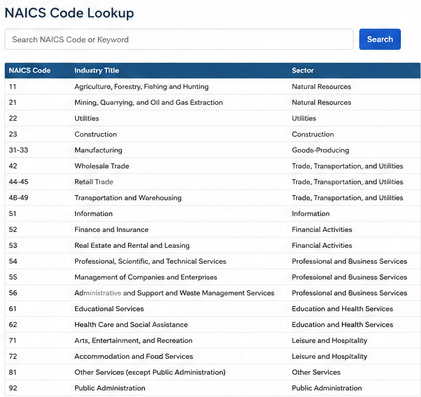
    A second valuable tool is the NAICS (North American Industry Classification System) Association. While Esri focuses on consumer characteristics, the NAICS database helps marketers identify businesses within specific industries. This is especially useful for business-to-business (B2B) marketing because it allows organizations to define potential customers based on industry type, company size, and market classification. For example, marketers promoting a product such as US Foods SmartCart AI can use NAICS codes to identify restaurants, foodservice operators, and hospitality businesses that are most likely to benefit from AI-powered purchasing recommendations. This information helps marketing teams concentrate their efforts on businesses that have the greatest potential to become customers rather than marketing to every organization in the foodservice industry (NAICS Association, n.d.).

    The information gathered from these research tools plays an important role in developing a marketing plan. Demographic and firmographic data help determine who the target customers are, while geographic information identifies where they are located. Psychographic and behavioral insights explain customer motivations, purchasing habits, and the problems they want to solve. Together, these insights allow marketers to create personalized messaging, select the most effective communication channels, establish competitive positioning, and allocate marketing budgets more efficiently (Kotler & Keller, 2022).

    Effective market segmentation also improves customer satisfaction because marketing messages become more relevant to the intended audience. Rather than delivering generic advertisements, companies can emphasize the specific benefits that matter most to their target customers. This targeted approach often leads to higher engagement, stronger customer relationships, improved conversion rates, and increased long-term loyalty.

    Ultimately, successful marketing begins with understanding the customer. Research tools such as Esri Tapestry Segmentation and the NAICS Association provide valuable insights that help marketers identify the most promising market segments and develop strategic marketing plans. By combining data-driven research with sound marketing principles, organizations can create campaigns that deliver greater value to customers while improving overall business performance.

    References

    Esri. (n.d.). Tapestry segmentation. https://www.esri.com/en-us/arcgis/products/tapestry-segmentation/overview

    Kotler, P., & Keller, K. L. (2022). Marketing management (16th ed.). Pearson.

    NAICS Association. (n.d.). NAICS association. https://www.naics.com/