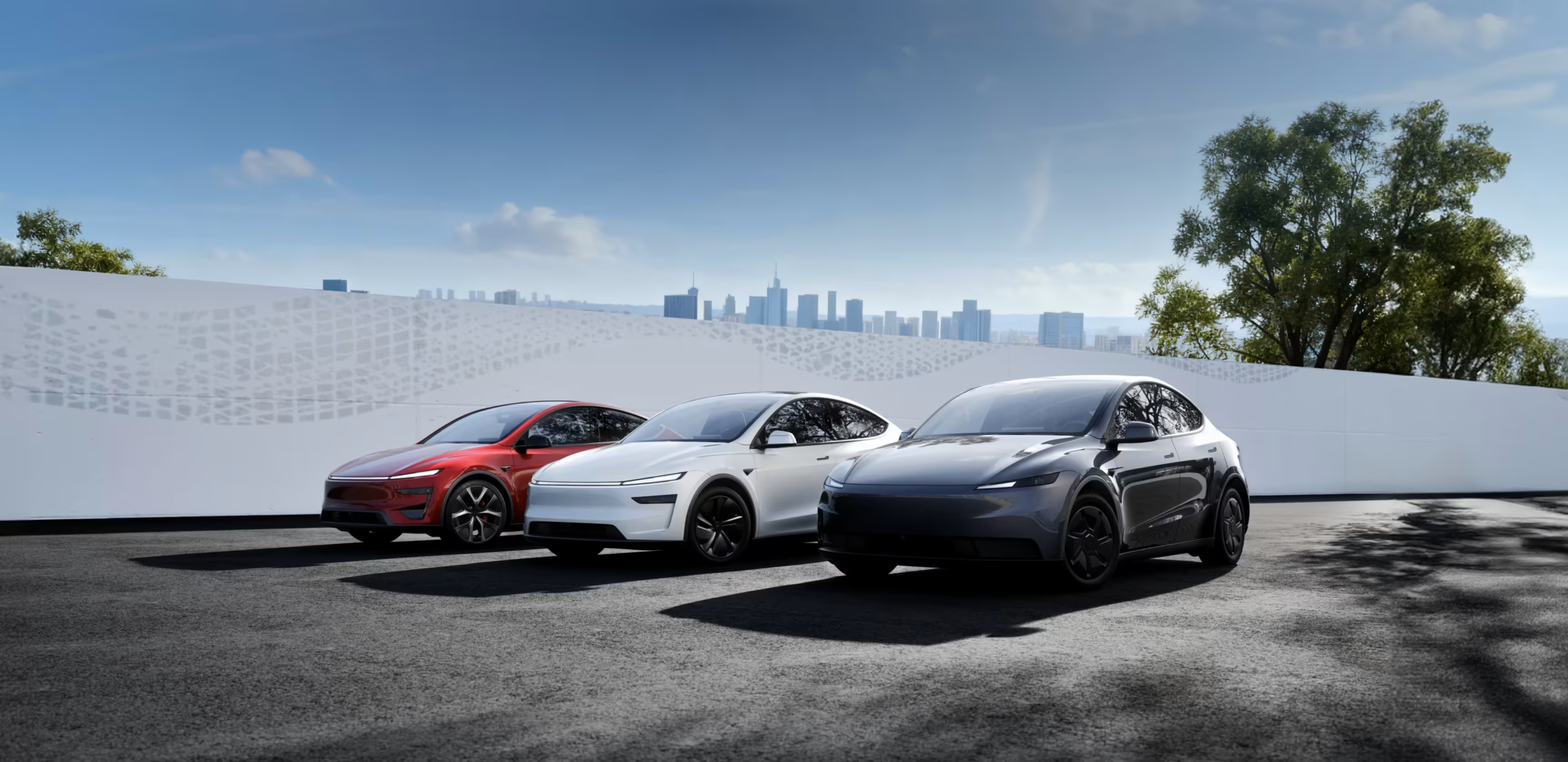
In today’s competitive marketplace, successful companies must do more than simply sell products or services. Brands must create a unique identity that clearly communicates who they are, what they stand for, and why consumers should choose them over competitors. This process is known as brand positioning. Strong brand positioning helps organizations build customer loyalty, strengthen brand equity, and differentiate themselves within crowded industries. One company that has successfully positioned itself through its brand name, logo, innovation, and mission is Tesla.
Tesla’s Mission and Vision
Tesla’s mission is “to accelerate the world’s transition to sustainable energy” (Tesla, n.d.). Unlike traditional automotive companies that focus primarily on transportation, Tesla positions itself as both a technology company and a sustainability leader. The company’s vision centers around innovation, clean energy, and the future of transportation. This mission is consistently reflected throughout Tesla’s branding, product development, and marketing strategy.

Tesla has successfully created a brand identity that appeals to consumers who value innovation, environmental responsibility, and premium technology. The company’s vehicles are not marketed simply as electric cars; instead, they are positioned as advanced technological experiences that represent the future of mobility. This clear and focused positioning helps Tesla stand apart from competitors in the automotive industry.
How Tesla Differentiates Itself From Competitors
One of Tesla’s greatest strengths is its ability to differentiate itself from competitors such as Ford, Toyota, and General Motors. Traditional automakers often compete on reliability, affordability, or fuel efficiency, while Tesla focuses heavily on innovation, performance, sustainability, and technology integration.
Tesla vehicles include several features that strengthen the company’s brand positioning, including:
- Advanced battery technology
- Over-the-air software updates
- Minimalist vehicle design
- Autopilot and self-driving capabilities
- High-performance electric vehicles

These features create strong Points of Differentiation (PODs) that separate Tesla from traditional automotive brands. Tesla positions its products as premium, futuristic, and environmentally responsible, which allows the company to build strong emotional connections with consumers and justify premium pricing.
At the same time, Tesla maintains important Points of Parity (POPs) by continuing to meet the standard expectations consumers have for automobiles, including safety, convenience, reliability, and performance. Maintaining this balance between differentiation and category expectations is critical for successful brand positioning.
The Role of Tesla’s Name and Logo in Brand Positioning
Tesla’s brand name plays a significant role in communicating its identity. The company was named after Nikola Tesla, an inventor known for his groundbreaking work in electricity and engineering. This naming strategy immediately creates associations with intelligence, innovation, and technological advancement. Even consumers who are unfamiliar with the full history of Nikola Tesla may still associate the name with science and futuristic thinking.
The Tesla logo also supports the company’s positioning strategy. The sleek, minimalist “T” logo reflects modern design and simplicity, which aligns with Tesla’s overall visual identity. The company consistently uses clean design elements throughout its vehicles, website, advertising, and retail locations. This consistency strengthens brand recognition and supports the premium image Tesla wants consumers to perceive.

Tesla’s branding successfully communicates innovation and exclusivity to consumers, competitors, and stakeholders. The company has built a recognizable identity that extends beyond automobiles into technology and sustainable energy solutions.
Why Tesla’s Brand Positioning Works
Tesla succeeds because its entire brand ecosystem supports a consistent message. Every aspect of the company, including its mission, products, logo, messaging, and customer experience, reinforces the same core identity centered around innovation and sustainability. According to Wheeler and Meyerson (2024), successful brands create differentiation by aligning brand identity with strategic positioning and meaningful consumer experiences. Tesla demonstrates this concept effectively through its consistent and recognizable branding strategy.
Another reason Tesla’s positioning is successful is the company’s ability to create strong emotional appeal. Consumers often view Tesla ownership as representing innovation, status, environmental responsibility, and forward-thinking values. This emotional connection strengthens customer loyalty and contributes to Tesla’s strong brand equity.
Brands with weak positioning strategies often fail because they lack consistency or differentiation. When companies do not clearly communicate their value or identity, consumers may struggle to understand what makes the brand unique. Weak positioning can result in confusion, reduced customer loyalty, and difficulty competing within the marketplace. Tesla avoids these challenges by maintaining a clear and focused brand strategy across all customer touchpoints.
Brand Naming Strategies and Their Impact
One important strategy Tesla demonstrates when developing a brand name is symbolic naming. Symbolic names create associations that reinforce the brand’s mission and identity. By choosing the name Tesla, the company connects itself to innovation, science, and electricity, all of which support its positioning within the automotive and energy industries.
Another strategy Tesla uses effectively is simplicity and memorability. Tesla is a short, distinctive, and easy-to-pronounce name that consumers can quickly recognize and remember. Strong brand names improve brand awareness and help companies stand out from competitors in crowded industries.
These naming strategies contribute significantly to Tesla’s successful positioning because they support the company’s innovative and futuristic brand image.
Conclusion
Brand positioning plays a critical role in helping companies differentiate themselves and build long-term customer loyalty. Tesla has successfully positioned itself as an innovative and sustainability-focused brand through its mission, products, logo, and naming strategy. By consistently communicating a clear identity centered around technology and environmental responsibility, Tesla has developed strong brand equity and emotional connections with consumers. The company’s success demonstrates how effective brand positioning can strengthen competitive advantage and create a powerful, recognizable brand within a highly competitive marketplace.
References
Tesla. (n.d.). About Tesla. Tesla
Wheeler, A., & Meyerson, R. (2024). Designing brand identity: A comprehensive guide to the world of brands and branding (6th ed.). John Wiley & Sons.
Leave a Reply
You must be logged in to post a comment.